Alternatives to Violence Workshops. (AVP )
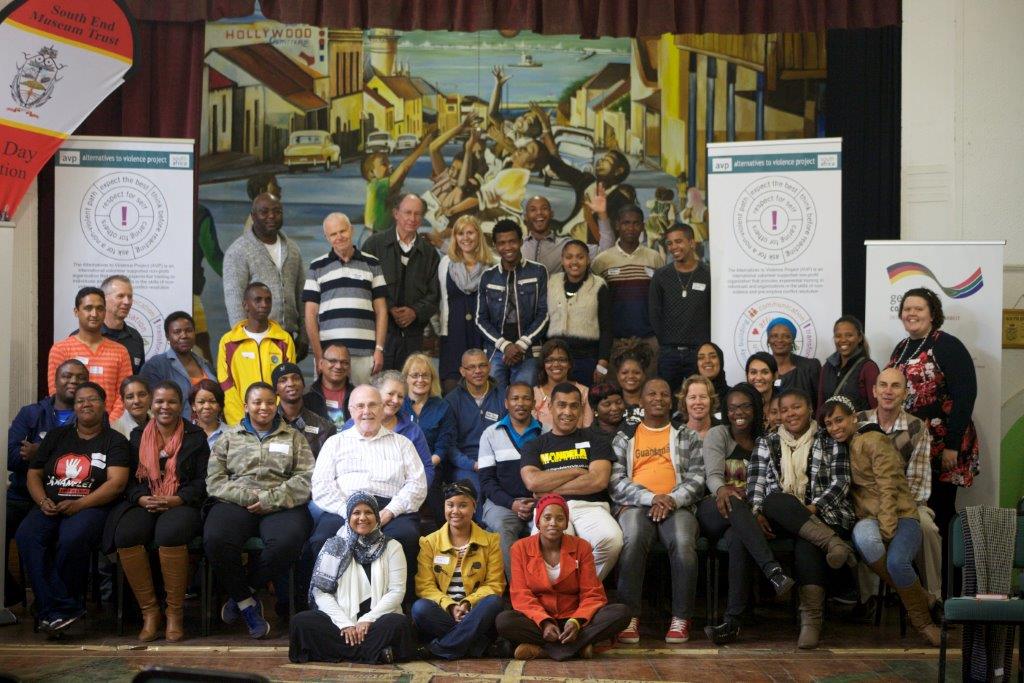
What are peace building workshops?
These are based on the Alternatives to Violence Project (AVP) which is active in over 60 countries throughout the world including the Democratic Republic of the Congo, Rwanda, Zimbabwe, the UK, the USA and South Africa. It is able to help build a capacity in society to deal with issues relating to security, development and stability including:
- Violent Conflict
- Disrespect for human rights and dignity
- Gender Violence
- Youth Vulnerability and Hopelessness
- Crime and Recidivism
- Poverty
It is a programme helping people to learn new skills and attitudes that assist with working towards fulfilling and violence-free lives. It also has a very positive effect on self-esteem. Every workshop is different but participants gain insight into such things as the effects and causes of violence, self-violence, non-violence in practice, discrimination, power, ways of communication, empathy, stereotyping etc. Each workshop is conducted by at least two but probably three, facilitators and lasts around 16 hours in total (normally two days). It is an intensive experiential learning process offered on three levels.
In the wider context we aim to work with:
- CBO's, NGO's and grassroots community organisations, particularly in disadvantaged areas
- Youth, particularly in disadvantaged schools and areas.
- Teachers
- Universities
- Prisons
- Churches at local and regional levels
- Hospitals and Clinics, especially HIV and AIDS centres
All the groups above (an others) can benefit from these interventions helping them to work pre-emptively to avoid violence, to resolve conflicts non-violently and to develop an ethos of non-violence in their organisations or communities.
We will be able to provide ongoing guidance, training, quality assurance and participation in the wider community of the Alternatives to Violence Project.
Workshops offered
- The Basic Workshop; an intensive two day learning experience that provides opportunities to explore interpersonal conflict resolution skills through a series of step by step processes. These experiences in small groups and one to one interactions build a sense of community and trust through experiential exercises focusing on:
- Affirmation - building self-esteem and trust
- lCommunication - improving both listening skills and assertive methods of expression
- Co-operation - developing co-operative attitudes that avoid competitive conflict
- Community - provides participants with an experience of what a caring community can be like
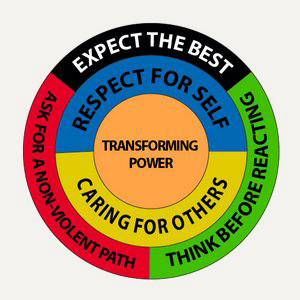
- Creative Conflict Resolution - Getting in touch with inner transforming power to resolve violence. Role plays provide an opportunity to explore this power and learn new and creative ways to respond to real conflicts in our lives
AVP workshops seek to assist individuals in personal growth and change. It is not psychotherapy but the sessions can be intense and personal and so each workshop should be restricted to a maximum of 20 participants.
2. The Advanced Workshop; also an intensive two day learning experience which focuses on the underlying causes of violence both in ourselves and in the world in which we live. It is designed to give participants opportunities to rebuild community, review in-depth the concept of the power to bring about transformation and proceed to set individual and group goals as the focus of the remainder of the workshop.
Focus topics might be:
- Fear - Reveals the hidden fears that usually underlie anger, jealousy and prejudice
- Anger - Results in a deeper understanding of the personal situations that trigger violence
- Power- (and powerlessness) helps individuals understand power structures.
- Communication - develops the skills and the ability to communicate in tense and stressful situations
- Resentment - helps participants to understand the resentment process and its cost
- Forgiveness - builds the groundwork for true reconciliation and freedom from guilt
- Stereotyping - builds awareness of stereotyping, bias and prejudice in personal relations
- Man/Woman Relationships - explores issues of fear, anger, power and powerlessness
- AIDS - understanding and acceptance for people who are HIV positive
- Stress - understanding stress and how to deal with it
- Other - whatever the group finds most compelling at that time.
- 2. The Training for Facilitators Workshop: This is also a two day workshop reserved for those who have completed the Basic and Advanced workshops and have been selected for further training. This focuses on developing team building, leadership skills facilitation skills and group process skills. Participants work in small groups actually functioning as facilitators. They receive guidance and practice in facilitating all parts of a Basic workshop whilst at the same time learning about:
- Team building and contracts
- Choosing a team leader
- Agendas
- Exercises
- Transforming Power
- Light and Livelies
- Role Plays
As a last step in the training of new facilitators they will work in teams with experienced facilitators for Basic and Advanced Workshops usually doing between three and nine workshops before the trainee is able to conduct workshops without a mentor.